Footage from evo magagind with reporters driving the Ferrari F40 and Bugatti Veyron through the canyons.
April 30, 2007
Honda Acura Legend vs Audi A6 vs BMW 530i
5th Gear test and review featuring Honda (Acura) Legend AWD vs Audi A6 vs BMW 530i.
Mercedes SLK32 AMG vs BMW M Roadster
Motorweek test and review featuring Mercedes SLK32 AMG vs BMW Z3 M Roadster.
Gumball 3000 Porsche
Great promotional video of the Gumball 3000 race featuring lots of Porsche cars.
Kelleners Sport BMW M6
Awesome Kelleners Sport BMW M6 hitting the canyons near the ring, this car sounds great.
April 28, 2007
Porsche Cayman S vs BMW Z4 M vs Honda S2000 va Nissan 350z Nismo
Best Motoring battle featuring Porsche Cayman S vs BMW Z4 M vs Honda S2000 va Nissan 350z Nismo.
Lamborghini Gallardo vs Mercedes CLK-DTM
Lamborghini Gallardo vs Mercedes CLK-DTM at the Nurburgring Nordschleife race track.
New Nissan Skyline GT-R testing
New Nissan Skyline GT-R testing at the ring, this car should have a 3.6 liter V6 twin turbo engine with 450 horsepower.
Buick turbo regal vs Supercharged Acura NSX
Street race between Buick turbo regal vs Supercharged Acura NSX.
April 26, 2007
Dodge Viper SRT10 vs Mercedes SL55 AMG
Car review and test featuring Dodge Viper SRT10 vs Mercedes SL55 AMG with a combined horsepower of almost 1000 horsepower.
Subaru vs Mitsubishi vs Nissan
Best Motoring battle featuring Subaru impreza WRX spec C type RA-R, Mitsubishi Monster Lancer Evo Ⅸ 340-spec, Subaru impreza WRX STI spec C, and Nissan MCR Z33.
BMW M5 touring
Car review and test from a German video magazine featuring the 500+ horsepower BMW M5 touring wagon.
Ferrari P4/5
Interview and drive with the owner and the person responsible for the ultra rare Ferrari P4/5.
Toyota motorsports 50 year history
Great video of Toyota motorsports 50 year history and development over the years.
April 25, 2007
Mine's Nissan Skyline GT-R time attack
Best Motoring Mine's Nissan Skyline GT-R time attack, this is truly one of the best tuned cars in the world.
Tuned Japanese cars
Tuned Japanese cars featuring modified Mazda RX7, Subaru WRX Sti, and Mitsubishi Evolution.
Classic turbo cars
Classic turbo cars featuring Porsche 944 Turbo vs Nissan 300ZX Turbo vs Mazda RX-7 Turbo vs Mitsubishi Starion Turbo.
Super Muscle Car Shootout
Super Muscle Car Shootout featuring some of the best muscle cars American car companies have ever produced.
Fast Porsche 996 twin turbo
Fast Porsche 996 twin turbo street legal running an incredible time of 10.03 seconds at 144 mph.
April 24, 2007
Ferrari F40 vs Ferrari 360 Challenge Stradale
A race from a roll featuring Ferrari F40 vs Ferrari 360 Challenge Stradale.
Mercedes E63 AMG T vs BMW M5 Touring
Two of the most power full wagons in the world featuring Mercedes E63 AMG T vs BMW M5 Touring.
Prodrive Aston Martin V8 Vantage
Writer James Mills enjoys the Prodrive Aston Martin V8 Vantage with free flow exhaust bypass as he drives around the Black Mountains of mid Wales. Another video short from WINDING ROAD Magazine.
Spyker F1 vs F16 Jet Fighter
The thrilling race between the Etihad Aldar Spyker Formula One Team F8-VII and an RNLAF F16 fighter plane.
Schumacher Driving Ferrari Enzo FXX
Awesome videos of Schumacher Driving his own black Ferrari Enzo FXX chassis number 30.
April 23, 2007
Turbo cars vs Naturally aspirated cars
Best motoring Turbo cars vs Naturally aspirated cars featuring modified Nissan, Mazda, Honda.
Porsche 996 Turbo Technical Information
Best Motoring rents out a mechanics bay in the Porsche factory to report the Porsche 996 Turbo Technical Information.
195MPH in a Corvette C6 ZO6 on the Autobahn
Some luck guys test out their Corvette top speed doing 195MPH in a Corvette C6 ZO6 on the Autobahn.
BMW Concept CS
BMW has created yet another work of art with this BMW Concept CS which is a 4 door but looks like a coupe.
Sleepy Driver Crashes Into Gas Station
Sleepy Driver Crashes Into Gas Station first hitting the gas pump then hitting the office.
BMW Concept CS Premiere Video
BMW Concept CS, World Premier at the Shanghai Motor Show, April 2007. Concept study of a foor-door Gran Turismo for the luxury (performance) segment.
2009 Ford Flex - promotional video
Ford unveiled the 2009 Flex at New York Auto Show. Flex is a a full-size crossover that sets a new standard for style, features, functionality and comfort in the U.S. industry’s hottest segment.
On sale in the summer of 2008, the Flex is arriving as crossovers continue to outpace even the remarkable growth of SUVs during the 1990s and minivans of the 1980s.
On sale in the summer of 2008, the Flex is arriving as crossovers continue to outpace even the remarkable growth of SUVs during the 1990s and minivans of the 1980s.
April 22, 2007
Honda Civic Type R battle
Honda Civic Type R battle featuring the 2007 model vs the older 2005 model Honda Civic Type R.
Nissan 350Z
Awesome video for the Nissan 350Z fanatics, you can actually feel this car driving through the streets at a very high speed.
April 21, 2007
Maserati MC12 vs Porsche Carrera GT vs Mercedes McLaren SLR
A rare car test and review featuring Maserati MC12 vs Porsche Carrera GT vs Mercedes McLaren SLR.
Tesla Roadster
One of the first and full car review and test of the battery powered rocket Tesla Roadster.
How to Double Your Gas Mileage
Great info to pass on to friends and family. This guy shows in a few simple steps How to Double Your Gas Mileage on your car.
Porsche vs other sports cars
Porsche 997 and 996 turbo vs Nissan 350z vs Acura NSX-R vs Ferrari 360 Modena.
2004 Infiniti G35 Coupe 6 speed vs 2007 G35 Sedan Automatic
Street race featuring 2004 Infiniti G35 Coupe 6 speed vs 2007 G35 Sedan Automatic. Both bone stock.
HKS Toyota Altezza
HKS Toyota Altezza aka Lexus IS know in the US, totally modified by HKS and hitting the track.
Semi truck crashes into car as it pulls over
A very scary moment when a Semi truck crashes into car as it pulls over.
April 19, 2007
Lamborghini Gallardo Superleggera
Another great footage of the Lamborghini Gallardo Superleggera from a German car review magazine.
Porsche 997 GT3 and GT3 RS
One of the best Porsche 997 GT3 and Porsche GT3 RS reviewed side by side.
Nissan 350Z Nismo 380RS
Car review of the latest Nissan 350Z Nismo 380RS, they take this great handling car though some nice windy roads.
Street racers documentary
A Street racers documentary with street racers explaining the whole street racing scene.
Race car battle
Race car battle featuring Toyota Supra, Porsche GT2, Nissan Skyline, Mitsubishi GTO(3000GT), Honda Accord, Ferrari 355 race cars.
Race car battle featuring Toyota Supra, Porsche GT2, Nissan Skyline, Mitsubishi GTO(3000GT), Honda Accord, Ferrari 355 race cars Race car battle featuring Toyota Supra, Porsche GT2, Nissan Skyline, Mitsubishi GTO(3000GT), Honda Accord, Ferrari 355 race cars.Race car battle featuring Toyota Supra, Porsche GT2, Nissan Skyline, Mitsubishi GTO(3000GT), Honda Accord, Ferrari 355 race cars.Race car battle featuring Toyota Supra, Porsche GT2, Nissan Skyline, Mitsubishi GTO(3000GT), Honda Accord, Ferrari 355 race cars.
Race car battle featuring Toyota Supra, Porsche GT2, Nissan Skyline, Mitsubishi GTO(3000GT), Honda Accord, Ferrari 355 race cars Race car battle featuring Toyota Supra, Porsche GT2, Nissan Skyline, Mitsubishi GTO(3000GT), Honda Accord, Ferrari 355 race cars.Race car battle featuring Toyota Supra, Porsche GT2, Nissan Skyline, Mitsubishi GTO(3000GT), Honda Accord, Ferrari 355 race cars.Race car battle featuring Toyota Supra, Porsche GT2, Nissan Skyline, Mitsubishi GTO(3000GT), Honda Accord, Ferrari 355 race cars.
Mine's Nissan R33 GT-R vs SARD Toyota Supra
Two monster Japanese sports cars featuring Mine's Nissan R33 GT-R vs SARD Toyota Supra battle it out.
Nissan R33 GT-R vs SARD Toyota Supra battle video Nissan R33 GT-R vs SARD Toyota Supra battle video Nissan R33 GT-R vs SARD Toyota Supra battle video Nissan R33 GT-R vs SARD Toyota Supra battle video Nissan R33 GT-R vs SARD Toyota Supra battle video Nissan R33 GT-R vs SARD Toyota Supra battle video Nissan R33 GT-R vs SARD Toyota Supra battle video
Nissan R33 GT-R vs SARD Toyota Supra battle video Nissan R33 GT-R vs SARD Toyota Supra battle video Nissan R33 GT-R vs SARD Toyota Supra battle video Nissan R33 GT-R vs SARD Toyota Supra battle video Nissan R33 GT-R vs SARD Toyota Supra battle video Nissan R33 GT-R vs SARD Toyota Supra battle video Nissan R33 GT-R vs SARD Toyota Supra battle video
Police vs Mitsubishi Lancer Evo
A low powered Police car vs Mitsubishi Lancer Evo in the rain, guess the Evo driver needs more the behind the wheel.
April 17, 2007
Nissan Skyline GT-R vs Porsche 996 Turbo vs Ferrari 360 Modena
This is a race at the Sugo Race Track in Japan between 996 Turbo, Ferrari 360 Modena, and Nismo Tuned 450bhp Nissan Skyline GT-R.
Porsche 996 Turbo video, Ferrari 360 Modena video, and Nismo Tuned 450bhp video Nissan Skyline GT-R video Porsche 996 Turbo video, Ferrari 360 Modena video, and Nismo Tuned 450bhp video Nissan Skyline GT-R video Porsche 996 Turbo video, Ferrari 360 Modena video, and Nismo Tuned 450bhp video Nissan Skyline GT-R video
Porsche 996 Turbo video, Ferrari 360 Modena video, and Nismo Tuned 450bhp video Nissan Skyline GT-R video Porsche 996 Turbo video, Ferrari 360 Modena video, and Nismo Tuned 450bhp video Nissan Skyline GT-R video Porsche 996 Turbo video, Ferrari 360 Modena video, and Nismo Tuned 450bhp video Nissan Skyline GT-R video
Toyota Supra with a V12 engine
A very odd engine swap for a Toyota Supra. The Toyota Supra engine is so good we don't see why these guys dropped a V12 in there.
Toyota Supra video engine Toyota Supra video engine Toyota Supra engine video Toyota Supra engine video Toyota engine Supra video
Toyota Supra video engine Toyota Supra video engine Toyota Supra engine video Toyota Supra engine video Toyota engine Supra video
2007 New York Auto Show Mercedes-Benz
A tour of the 2007 New York Auto Show featuring the new Mercedes-Benz products.
Kenny Brown P2 Panther Ford Crown Victoria
Awesome Kenny Brown P2 Panther Ford Crown Victoria, this is the great sleeper.
How Honda VTEC works
A great animation featuring How Honda VTEC works, there is a rumor that a more advanced version of this system in in the works.
April 16, 2007
Corvette C6 Z06 600hp vs Nissan Skyline 650hp
Two very awesome cars street racing, check out this Corvette C6 Z06 600hp vs Nissan Skyline 650hp battle.
The Stig from Top Gear talks
Finally after all these years The Stig from Top Gear talks. But the identity is still not known.
Lamborghini Murcielago race car crash
Another painful Lamborghini Murcielago race car crash. These racing Lambo's are very rare.
Dahlback VW Golf
Checkout this Dahlback VW Golf with 1200 horsepower blast down the Butonwillow race track.
Mercedes Benz CLK63 AMG
Promotional video of the Mercedes Benz CLK63 AMG semi race car for the streets built by Mercedes AMG.
2008 BMW M3 on a race track
2008 BMW M3 on a race track, you can clearly hear the new V8 engine sound being totally different from the old engine.
Making of the Ferrari 599 GTB Fiorano
A rare and complete look inside the Making of the Ferrari 599 GTB Fiorano.
Porsche Cayman
Car review from Motorweek featuring the Porsche Cayman. This car is a real threat to the Porsche 911 line.
April 15, 2007
Bentley Continental GT
Promotional videos of the super luxury coupe Bentley Continental GT with a V12 twin turbo engine putting out 550 horsepower.
1987 Buick Regal Grand National GNX
Car review from Car and Driver featuring the ultra rare 1987 Buick Regal Grand National GNX.
April 14, 2007
Racing Simulator
Popular Mechanics features $15,000 Racing Simulator. Geek goes for a ride in DBox GP-100 gaming chair at CES.
Top Speed Challenge
Motor Trend Top Speed Challenge featuring Mitsubishi Evolution, Chevy Corvette Z06, Dodge Viper SRT-10, Ford Lightning, Ford Mustang SVT Cobra, Lamborghini Murcielago, Ferrari 575M, Moseler 900MT Photon, Mercedes CL55, Jaguar XKR.
Audi R8 Test Drive
Popular Mechanics Audi R8 Test Drive, this car sounds great with the 420 horsepower V8 engine.
Maserati MC12 race car crash
This is painful to watch but check out this Maserati MC12 race car crash.
April 12, 2007
Giugiaro Ford Mustang Concept
Great test drive of the one of a kind multi million dollar Giugiaro Ford Mustang Concept car.
V8 Engine Block Machined From Solid Block
V8 Engine Block Machined From Solid Block of aluminum. The CNC machine used is a state of the art Matsuura 5 axis MAM72-63V.
Built 1967 Chevy Camaro
Street racing featuring Built 1967 Chevy Camaro vs T04R powered Pontiac GTP vs ported blower 03 Ford cobra, 27psi Mitsubishi Evo.
Ford Mustang Super Stallion
Motor Trend review of this awesome 595 horsepower Ford Mustang Super Stallion.
Lamborghini Gallardo Superleggera Road Test
Car review from Popular Mechanics featuring Lamborghini Gallardo Superleggera Road Test.
Mustang GT into a custom $100k dream machine
Watch the Stangpede team convert a stock Mustang GT into a custom $100k dream machine in front of a LIVE audience in a record-breaking 4 Hours & 45min!
2008 Subaru Impreza and WRX
2008 Subaru Impreza and WRX promotional videos, for the none hatchback fans this is a very sad story.
Lamborghini LP640
Lamborghini's famous test driver, Valentino Balboni driving hard in a Murci LP640 on the Bahrain International race track!
Audi RS8
Audi RS8 testing at the Ring right before the it catches on fire and gets totally destroyed. This car has the Lamborghini Gallardo V10 engine.
April 11, 2007
BMW 335i vs Mitsubishi Evo IX MR
A race from 0-80mph ferauring BMW 335i with procede ECU vs Mitsubishi Evo IX MR with mbc, turbo back exhaust, CIA, chp.
Porsche 959Porsche 959
Car review of one of the best cars Porsche has ever made, the legendary Porsche 959.
Venom Twin Turbo Dodge Viper
Venom Twin Turbo Dodge Viper Competition Coupe Sets Texas Mile Record of 217.4 mph on March 25, 2007 and runs 0-220 mph in 24.1 sec.
Crashing a Porsche Carerra GT
For the movie "Redline" the producer offered to Crashing his own Porsche Carerra GT.
April 10, 2007
Mitsubishi Evo VIII MR vs Toyota Supra
Very fast Mitsubishi Evo VIII MR vs Toyota Supra, this run is at LACR which is a very slow track yet the Mitsu still manages a 10 second run.
4WD vs RWD Subaru WRX and Mitsubishi Evo
Best Motoring battle featuring 4WD vs RWD Subaru WRX and Mitsubishi Evo.
Mitsubishi Evo 2
Mitsubishi Evo 2 sets the world record in the standing mile at 202 mph in the unlimited street class with no NOS.
Pontiac G8
A promotional videos of the Pontiac G8, this car looks awesome. Hope they will have a powerful engine option.
Jaguar XJ220
Car review of the super exotic Jaguar XJ220, this car went head to head with he Ferrari F40.
Ford GT500 vs Dodge Charger SRT8
A drag race featuring Ford GT500 vs Dodge Charger SRT8. Thought the Mustang would be a lot faster.
Honda Civic Type R vs other JDM
Best Motoring battle featuring Honda Civic Type R vs other JDM including Toyota Celica and Honda S2000.
2008 BMW M3 commercial
BMW has decided to release their commercial for the 2008 BMW M3 featuring a white BMW M3.
BMW M3 CONCEPT CAR
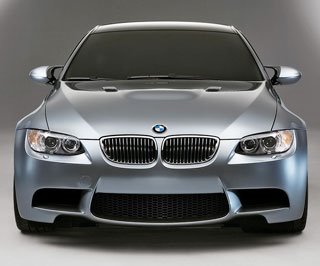
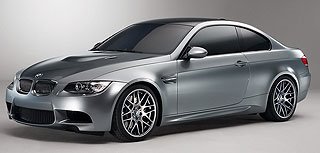
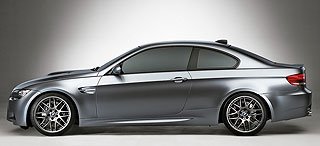
 • Concept study of a BMW M3 by BMW M GmbH, dimensions and fundamental form based on BMW 3 Series Coupe, exclusive new engineering of almost every body element, purpose-built for individualistic form and maximum sporting potential.
• At the core of this concept study is an M3-typical V8 engine tuned to the high revving M concept.
• Front design conveying a high performance sports car, functional execution of the front apron and engine compartment lid, a robust Powerdome and large air intakes that express the vehicle's superior drive power, particularly voluminous air intakes for ample air supply to the engine compartment through the elimination of fog lamps, typical of M, and a front apron in a pronounced forward position that symbolises the car's motoring spirit.
• Sharply defined wheel arches, gill-shaped openings in the front side walls with an elaborate three-dimensional design typical of M cars, and chrome brackets with integrated direction indicators.Characteristic M-brand side skirts providing the side view with an energy-laden accent, visual emphasis of the rear-wheel drive and car's wide track, 19-inch light alloy rims with the characteristic Y-spoke design, exclusive exterior mirrors with an aerodynamically optimised design.
• Rear design with horizontal lines accentuating the car's wide track, pronounced wheel orientation as a symbol of its powerful stance, rear diffuser that mirrors design elements of the front apron, balanced proportions underlining the BMW M3's supremacy, M-typical double tailpipes arranged toward the centre of the vehicle.
• Intelligent lightweight construction that directly influences the vehicle's agility and dynamic performance, aluminium engine compartment lid. Side walls made of synthetic material and CFRP roof that optimise weight distribution and centre of gravity, visible CFRP roof construction as an additional design element, emphasis of flat silhouette and high tech character of the vehicle.
The Vision of Ultimate Driving Pleasure: The BMW M3 Concept Car.
read more about BMW M3
BMW M3 CONCEPT CAR
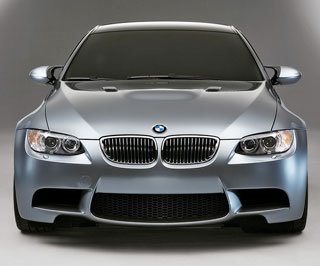

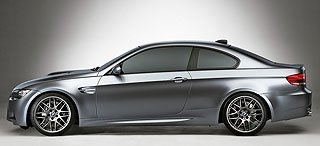
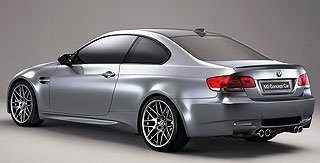 • Concept study of a BMW M3 by BMW M GmbH, dimensions and fundamental form based on BMW 3 Series Coupe, exclusive new engineering of almost every body element, purpose-built for individualistic form and maximum sporting potential.
• At the core of this concept study is an M3-typical V8 engine tuned to the high revving M concept.
• Front design conveying a high performance sports car, functional execution of the front apron and engine compartment lid, a robust Powerdome and large air intakes that express the vehicle's superior drive power, particularly voluminous air intakes for ample air supply to the engine compartment through the elimination of fog lamps, typical of M, and a front apron in a pronounced forward position that symbolises the car's motoring spirit.
• Sharply defined wheel arches, gill-shaped openings in the front side walls with an elaborate three-dimensional design typical of M cars, and chrome brackets with integrated direction indicators.Characteristic M-brand side skirts providing the side view with an energy-laden accent, visual emphasis of the rear-wheel drive and car's wide track, 19-inch light alloy rims with the characteristic Y-spoke design, exclusive exterior mirrors with an aerodynamically optimised design.
• Rear design with horizontal lines accentuating the car's wide track, pronounced wheel orientation as a symbol of its powerful stance, rear diffuser that mirrors design elements of the front apron, balanced proportions underlining the BMW M3's supremacy, M-typical double tailpipes arranged toward the centre of the vehicle.
• Intelligent lightweight construction that directly influences the vehicle's agility and dynamic performance, aluminium engine compartment lid. Side walls made of synthetic material and CFRP roof that optimise weight distribution and centre of gravity, visible CFRP roof construction as an additional design element, emphasis of flat silhouette and high tech character of the vehicle.
The Vision of Ultimate Driving Pleasure: The BMW M3 Concept Car.
read more about BMW M3
Audi R8 commercial
A very inspiring Audi R8 commercial going through Audi racing history and what made the Audi R8.
Audi R8
Audi has incorporated the name and the genes of the five-time Le Mans winner, the Audi R8, into a spectacular sports car. Three years after the unveiling of the Audi Le Mans quattro concept car, the production version will be making its debut at the Paris Motor Show in the guise of the new Audi R8 mid-engined sports model.
It is a fascinating driving machine and the sporty pinnacle of the Audi brand. The mid-mounted 420 bhp V8 FSI engine, quattro permanent four-wheel drive and Audi Space Frame aluminium body form the basis for truly outstanding driving dynamics. The Audi R8 will be available to order from 28 September 2006; first deliveries will be made in the first half of 2007.
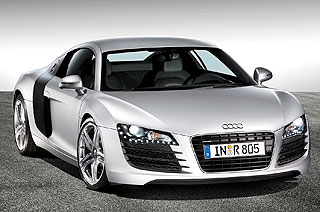
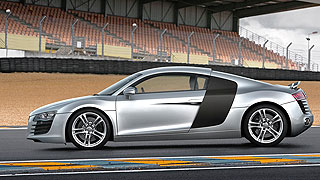

 The exterior
Even at first glance, the calibre of the car is plain to see. The Audi R8 sits broad and squat on the road, the strongly accentuated rear end appearing to flex its muscles like a sprinter ready for the off.
The characteristic proportions of the vehicle are dictated by the location of the engine behind the cockpit. This layout is a typical feature of race cars. One of the most striking examples of this design – and as such one of the legitimate antecedents of the Audi R8 – was, and still is, the Auto Union Type C Grand Prix car. The central position of the engine is above all a boon to driving dynamics, as it allows for a weight distribution, as on the R8, of 44 percent to the front and 56 percent to the rear.
The car's body is highly compact in appearance. The front end and the gently curved roof arc are drawn in a sweeping line; a line which immediately marks the two-seater out as an Audi.
The interior
The sporty interior is dominated by a totally driver-oriented cockpit architecture, integrating the driver between the dashboard and the high centre console. The instrument panel above the console is angled slightly towards the driver. The flat-bottomed steering wheel is a typical feature of the sportiest Audi models, and also enables comfortable sports car entry and exit.
Form follows function: this design principle is implemented throughout the Audi R8. Alongside the driver-oriented architecture, also reflected in the styling of the side window sills, the choice of materials also makes for a highly functional look and feel. Looking around when in the driving seat makes one thing clear: just like in the R8 race car, the styling and placement of all the elements in the cockpit of this driving machine is focussed on the essentials. The centrepoint of everything is the driver.
The drive train
Turbine-like power up to the highest rev ranges, a high maximum torque, all combined with a fascinating sound, are the characteristics of a perfect sports car engine. An engine that is fascinating both in terms of its enormous power potential and its suitability for everyday use.
In the high-revving 420 bhp eight-cylinder engine, the evolution of FSI petrol direct injection technology has reached a new high. This technology has also enjoyed many triumphs in the Audi R8 race car.
The figures illustrate the outstanding potential of the eight-cylinder unit. At 7,800 rpm the 4.2-litre engine delivers 309 kW (420 bhp) of power output. Peak torque is 430 Newton-metres from 4.500 to 6,000 rpm. And no less than 90 per cent of this maximum torque is maintained consistently throughout a wide engine speed range from 3,500 all the way to 7,600 rpm. As a result of these qualities, the eight-cylinder power unit provides maximum thrust in virtually any driving situation.
The performance figures are equally impressive: the R8 accelerates from a standstill to 100 km/h in 4.6 seconds and reaches a top speed of 301 km/h.
The engine is a high-revving unit. The maximum engine speed is 8,250 rpm. The advantages of this principle are superior power output at high engine speeds and a smooth, eager responsiveness all across the revs range. Added to this are its agility, liveliness and engine sound, which is similar to that of a race car.
The chassis
The chassis features forged aluminium double wishbones at the front and rear. At the front they are triangulated, while at the rear the top one is triangulated and the bottom one is a triangulated wishbone with a track rod. This provides for optimum wheel control, and is a geometry which has proved itself to be the ideal solution in delivering agility, maximum steering precision and precisely defined self-steering characteristics.
Direct, hydraulic rack-and-pinion steering provides optimum feedback to assist the driver.
The spring and damper set-up is stiff in order to deliver maximum driving dynamics, while still providing a quite astonishing level of ride comfort. This is particularly true when the 'Audi magnetic ride' adaptive damper system is chosen as an alternative to the standard gas-filled shock absorbers.
The reason for this is that these shock absorbers employ an innovative technology. Instead of the conventional damper fluid, a magnetorheological fluid is used – in other words, a fluid whose viscosity can be influenced by an electromagnetic field. This effect enables the damping characteristic to be influenced electronically at will and instantaneously, by applying a voltage to the electromagnets.
Equipment and trim
Even the standard equipment of the Audi R8 meets the high demands of customers in this segment. Xenon plus lights, LED rear lights and daytime running lights, 18-inch aluminium wheels, an audio system with 7-inch monitor, an anti-theft alarm and Leather/Alcantara interior trim are just some of the items on the extensive list of standard features.
The range of optional extras leaves virtually nothing to be desired. A Bang & Olufsen sound system, featuring an output of 465 watts and 12 specially designed speakers, delivers surround sound of the highest standard. A microphone-based vehicle noise compensation system adjusts audio levels to changing road conditions and speeds.
The acoustic parking system and a rear-view camera help the driver to manoeuvre into even the tightest of spaces. The radio/navigation system plus, featuring a large-format colour monitor and MMI keypad, combines extensive functionality with extreme user-friendliness.
A range of coordinated and ideally combinable design and leather trim packages from Audi and from quattro GmbH can turn any R8 into the customer’s personal dream car.
The wheels range offers design alternatives in sizes of 18 and 19 inches, fitted with 235/35 size tyres at the front and up to 295/30 at the rear. A total of eight exterior colours are available, from Ibis White to Phantom Black, pearl effect.
The craftsmanship
The Audi R8 is being built on a small-lot production line in a specially constructed new block at the Audi plant in Neckarsulm. The entire production process – from the bodyshell construction to final assembly – is organised in the same way as a craft workshop. Small teams of specialists accompany every step of production, subjecting every part and component to intense scrutiny. This ensures that every one of the maximum of 15 cars per day built will more than match the customary high quality standards of the Audi product range.
The equipment specifications, data and prices stated here refer to the model range offered for sale in Germany. Subject to amendment; errors and omissions excepted.
http://autobeat.blogspot.com/2007/01/2007-audi-r8.html
Audi R8
Audi has incorporated the name and the genes of the five-time Le Mans winner, the Audi R8, into a spectacular sports car. Three years after the unveiling of the Audi Le Mans quattro concept car, the production version will be making its debut at the Paris Motor Show in the guise of the new Audi R8 mid-engined sports model.
It is a fascinating driving machine and the sporty pinnacle of the Audi brand. The mid-mounted 420 bhp V8 FSI engine, quattro permanent four-wheel drive and Audi Space Frame aluminium body form the basis for truly outstanding driving dynamics. The Audi R8 will be available to order from 28 September 2006; first deliveries will be made in the first half of 2007.

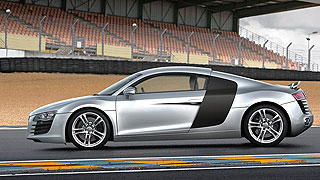

 The exterior
Even at first glance, the calibre of the car is plain to see. The Audi R8 sits broad and squat on the road, the strongly accentuated rear end appearing to flex its muscles like a sprinter ready for the off.
The characteristic proportions of the vehicle are dictated by the location of the engine behind the cockpit. This layout is a typical feature of race cars. One of the most striking examples of this design – and as such one of the legitimate antecedents of the Audi R8 – was, and still is, the Auto Union Type C Grand Prix car. The central position of the engine is above all a boon to driving dynamics, as it allows for a weight distribution, as on the R8, of 44 percent to the front and 56 percent to the rear.
The car's body is highly compact in appearance. The front end and the gently curved roof arc are drawn in a sweeping line; a line which immediately marks the two-seater out as an Audi.
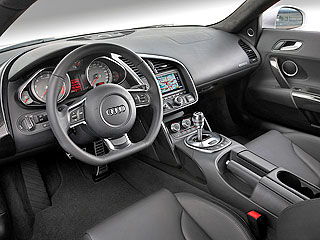
The interior
The sporty interior is dominated by a totally driver-oriented cockpit architecture, integrating the driver between the dashboard and the high centre console. The instrument panel above the console is angled slightly towards the driver. The flat-bottomed steering wheel is a typical feature of the sportiest Audi models, and also enables comfortable sports car entry and exit.
Form follows function: this design principle is implemented throughout the Audi R8. Alongside the driver-oriented architecture, also reflected in the styling of the side window sills, the choice of materials also makes for a highly functional look and feel. Looking around when in the driving seat makes one thing clear: just like in the R8 race car, the styling and placement of all the elements in the cockpit of this driving machine is focussed on the essentials. The centrepoint of everything is the driver.
The drive train
Turbine-like power up to the highest rev ranges, a high maximum torque, all combined with a fascinating sound, are the characteristics of a perfect sports car engine. An engine that is fascinating both in terms of its enormous power potential and its suitability for everyday use.
In the high-revving 420 bhp eight-cylinder engine, the evolution of FSI petrol direct injection technology has reached a new high. This technology has also enjoyed many triumphs in the Audi R8 race car.
The figures illustrate the outstanding potential of the eight-cylinder unit. At 7,800 rpm the 4.2-litre engine delivers 309 kW (420 bhp) of power output. Peak torque is 430 Newton-metres from 4.500 to 6,000 rpm. And no less than 90 per cent of this maximum torque is maintained consistently throughout a wide engine speed range from 3,500 all the way to 7,600 rpm. As a result of these qualities, the eight-cylinder power unit provides maximum thrust in virtually any driving situation.
The performance figures are equally impressive: the R8 accelerates from a standstill to 100 km/h in 4.6 seconds and reaches a top speed of 301 km/h.
The engine is a high-revving unit. The maximum engine speed is 8,250 rpm. The advantages of this principle are superior power output at high engine speeds and a smooth, eager responsiveness all across the revs range. Added to this are its agility, liveliness and engine sound, which is similar to that of a race car.
The chassis
The chassis features forged aluminium double wishbones at the front and rear. At the front they are triangulated, while at the rear the top one is triangulated and the bottom one is a triangulated wishbone with a track rod. This provides for optimum wheel control, and is a geometry which has proved itself to be the ideal solution in delivering agility, maximum steering precision and precisely defined self-steering characteristics.
Direct, hydraulic rack-and-pinion steering provides optimum feedback to assist the driver.
The spring and damper set-up is stiff in order to deliver maximum driving dynamics, while still providing a quite astonishing level of ride comfort. This is particularly true when the 'Audi magnetic ride' adaptive damper system is chosen as an alternative to the standard gas-filled shock absorbers.
The reason for this is that these shock absorbers employ an innovative technology. Instead of the conventional damper fluid, a magnetorheological fluid is used – in other words, a fluid whose viscosity can be influenced by an electromagnetic field. This effect enables the damping characteristic to be influenced electronically at will and instantaneously, by applying a voltage to the electromagnets.
Equipment and trim
Even the standard equipment of the Audi R8 meets the high demands of customers in this segment. Xenon plus lights, LED rear lights and daytime running lights, 18-inch aluminium wheels, an audio system with 7-inch monitor, an anti-theft alarm and Leather/Alcantara interior trim are just some of the items on the extensive list of standard features.
The range of optional extras leaves virtually nothing to be desired. A Bang & Olufsen sound system, featuring an output of 465 watts and 12 specially designed speakers, delivers surround sound of the highest standard. A microphone-based vehicle noise compensation system adjusts audio levels to changing road conditions and speeds.
The acoustic parking system and a rear-view camera help the driver to manoeuvre into even the tightest of spaces. The radio/navigation system plus, featuring a large-format colour monitor and MMI keypad, combines extensive functionality with extreme user-friendliness.
A range of coordinated and ideally combinable design and leather trim packages from Audi and from quattro GmbH can turn any R8 into the customer’s personal dream car.
The wheels range offers design alternatives in sizes of 18 and 19 inches, fitted with 235/35 size tyres at the front and up to 295/30 at the rear. A total of eight exterior colours are available, from Ibis White to Phantom Black, pearl effect.
The craftsmanship
The Audi R8 is being built on a small-lot production line in a specially constructed new block at the Audi plant in Neckarsulm. The entire production process – from the bodyshell construction to final assembly – is organised in the same way as a craft workshop. Small teams of specialists accompany every step of production, subjecting every part and component to intense scrutiny. This ensures that every one of the maximum of 15 cars per day built will more than match the customary high quality standards of the Audi product range.
The equipment specifications, data and prices stated here refer to the model range offered for sale in Germany. Subject to amendment; errors and omissions excepted.
http://autobeat.blogspot.com/2007/01/2007-audi-r8.html
April 7, 2007
Mitsubishi Evo 8 vs Comptech Supercharged Acura RSX Type S
A race featuring Mitsubishi Evo 8 running 23psi of boost vs Comptech Supercharged Acura RSX Type S at 10psi.
Evolution VIII
Mitsubishi Lancer Evolution VIII on a wet circuit.
Production January 2003–March 2005
Platform CT9A
Wheelbase 2625 mm (103.3 in)
Length 4490–4535 mm (176.8–178.5 in)
Width 1770 mm (69.7 in)
Height 1450 mm (57.1 in)
Ride height 140 mm
Front track 1500–1515 mm
Rear track 1500–1515 mm
Curb weight 1320–1410 kg
The Evolution was changed again in 2003, this time sporting Super Active Yaw Control to handle traction and a 6-speed manual gearbox. It was available with 280 PS (276 hp/206 kW) in three trims: standard (GSR in Japan), RS (devoid of all excess components, such as interior map lights, power windows/doors, and radio) and MR. RS Editions came with a revised limited-slip front differential.
The Lancer Evolution VIII MR uses slick-response Bilstein shocks for improved handling. The aluminium roof panel and other reductions in body weight have lowered the centre of gravity to realize more natural roll characteristics. Detail improvements have also been made to Mitsubishi’s own electronic all-wheel drive, to the ACD 5 + Super AYC 6 traction control and to the Sports ABS systems. The Lancer Evolution VIII displayed at the 2003 Tokyo Motor Show took the MR designation traditionally reserved for Mitsubishi Motors high-performance models and used first on the Galant GTO. Other parts on the MR include BBS alloy wheels, Bilstein shocks, and an aluminium roof. In the United Kingdom, many special Evolutions were introduced, which included FQ300, FQ320, FQ340, and FQ400 variants. They each came with 305, 320, 340, and 400 hp (227, 239, 254 and 298 kW), respectively.
The FQ400, sold through Ralliart UK, produces 302.13 kW (405.2 hp), from its 2.0 L 4G63 engine as the result of being specially modified by United Kingdom tuning firms Rampage, Owen Developments and Flow Race Engines. At 202.9 hp (151.3 kW) per litre, it has one of the highest specific output per litre of any roadcar engine. With a curb weight of around 3200 lb (1451 kg), it achieves a 0-60 in 3.5 seconds and a 0-100 in around 9 seconds, while costing about £47,000. BBC's television series Top Gear demonstrated that the FQ-400 could surprisingly keep up with a Lamborghini Murcielago around a test track. The Stig recorded a Top Gear Power Lap Times of 1 minute 24.8 seconds. In a similar test conducted by UK supercar magazine evo, the Evolution was able to lap the Bedford Autodrome faster than an Audi RS4 and a Porsche Carrera 4S.
The Lancer Evolution VIII was also the first Evolution to be sold in the United States, spurred by the success of the Subaru Impreza WRX which had been released there just three years prior. The Evolution VIII found its true competition in the Subaru Impreza WRX STI model the same year as the Evolution VIII's US introduction. However, the internal components for the American versions were largely stripped-down versions of the specifications for the Japanese Lancer Evolution VIII. No US-spec Evolution model has active yaw control, including the 2006 Evolution IX. The American 2003 and 2004 GSRs are without the helical limited-slip front differential and 6-speed manual transmission. The 2004 US spec RS models, however, do have a front helical limited-slip differential. All 2003, 2004 and 2005 RS and GSR models have the Japanese Evolution VII's 5-speed transmission. The MR edition was introduced to the US in 2005, with ACD and the only model with a 6-speed transmission. The 2005 US spec RS and GSR have the ACD standard, and the front helical limited-slip differential is now standard on all models. The timing and tuning are also slightly lower than its Japanese counterpart, allowing it to adhere to the strict emissions regulations of the United States.
Most Evolution VIIIs have a carbon fiber rear spoiler with matching body-color endplates. All Evos have lightweight aluminum front fenders and hood. MR and RS editions have an aluminum roof. Additionally, MR Editions come equipped with 6-speed transmission, and BBS wheels. The basic RS Edition does not come with power windows or locks, or a radio. It DOES however, despite preproduction info, come standard with A/C in all USDM models.
Evolution VIII
Mitsubishi Lancer Evolution VIII on a wet circuit.
Production January 2003–March 2005
Platform CT9A
Wheelbase 2625 mm (103.3 in)
Length 4490–4535 mm (176.8–178.5 in)
Width 1770 mm (69.7 in)
Height 1450 mm (57.1 in)
Ride height 140 mm
Front track 1500–1515 mm
Rear track 1500–1515 mm
Curb weight 1320–1410 kg
The Evolution was changed again in 2003, this time sporting Super Active Yaw Control to handle traction and a 6-speed manual gearbox. It was available with 280 PS (276 hp/206 kW) in three trims: standard (GSR in Japan), RS (devoid of all excess components, such as interior map lights, power windows/doors, and radio) and MR. RS Editions came with a revised limited-slip front differential.
The Lancer Evolution VIII MR uses slick-response Bilstein shocks for improved handling. The aluminium roof panel and other reductions in body weight have lowered the centre of gravity to realize more natural roll characteristics. Detail improvements have also been made to Mitsubishi’s own electronic all-wheel drive, to the ACD 5 + Super AYC 6 traction control and to the Sports ABS systems. The Lancer Evolution VIII displayed at the 2003 Tokyo Motor Show took the MR designation traditionally reserved for Mitsubishi Motors high-performance models and used first on the Galant GTO. Other parts on the MR include BBS alloy wheels, Bilstein shocks, and an aluminium roof. In the United Kingdom, many special Evolutions were introduced, which included FQ300, FQ320, FQ340, and FQ400 variants. They each came with 305, 320, 340, and 400 hp (227, 239, 254 and 298 kW), respectively.
The FQ400, sold through Ralliart UK, produces 302.13 kW (405.2 hp), from its 2.0 L 4G63 engine as the result of being specially modified by United Kingdom tuning firms Rampage, Owen Developments and Flow Race Engines. At 202.9 hp (151.3 kW) per litre, it has one of the highest specific output per litre of any roadcar engine. With a curb weight of around 3200 lb (1451 kg), it achieves a 0-60 in 3.5 seconds and a 0-100 in around 9 seconds, while costing about £47,000. BBC's television series Top Gear demonstrated that the FQ-400 could surprisingly keep up with a Lamborghini Murcielago around a test track. The Stig recorded a Top Gear Power Lap Times of 1 minute 24.8 seconds. In a similar test conducted by UK supercar magazine evo, the Evolution was able to lap the Bedford Autodrome faster than an Audi RS4 and a Porsche Carrera 4S.
The Lancer Evolution VIII was also the first Evolution to be sold in the United States, spurred by the success of the Subaru Impreza WRX which had been released there just three years prior. The Evolution VIII found its true competition in the Subaru Impreza WRX STI model the same year as the Evolution VIII's US introduction. However, the internal components for the American versions were largely stripped-down versions of the specifications for the Japanese Lancer Evolution VIII. No US-spec Evolution model has active yaw control, including the 2006 Evolution IX. The American 2003 and 2004 GSRs are without the helical limited-slip front differential and 6-speed manual transmission. The 2004 US spec RS models, however, do have a front helical limited-slip differential. All 2003, 2004 and 2005 RS and GSR models have the Japanese Evolution VII's 5-speed transmission. The MR edition was introduced to the US in 2005, with ACD and the only model with a 6-speed transmission. The 2005 US spec RS and GSR have the ACD standard, and the front helical limited-slip differential is now standard on all models. The timing and tuning are also slightly lower than its Japanese counterpart, allowing it to adhere to the strict emissions regulations of the United States.
Most Evolution VIIIs have a carbon fiber rear spoiler with matching body-color endplates. All Evos have lightweight aluminum front fenders and hood. MR and RS editions have an aluminum roof. Additionally, MR Editions come equipped with 6-speed transmission, and BBS wheels. The basic RS Edition does not come with power windows or locks, or a radio. It DOES however, despite preproduction info, come standard with A/C in all USDM models.
550HP Porsche Cayanne Twin Turbo
Awesome AWD burnouts and donuts with a 550HP Porsche Cayanne Twin Turbo.
Lamborghini Gallardo Superleggera
Lamborghini Gallardo Superleggera testing at a high speed test track. This car sounds awesome.
Gallardo Superleggera
A special version of the Gallardo, dubbed the Superleggera will be launched at the 2007 Geneva Auto Show supposedly in preparation for the next Ferrari Challenge Stradale. The Superleggera is lighter than the base Gallardo by around 154 lbs (down to approximately 3370 lbs) thanks to the use of carbon fibre panels for the rear diffuser, undertray, the rearview-mirror housings, the interior door panels, the central tunnel, and the engine cover. The engine ECU has been remapped to release an exta 10hp for a total of 523hp. The lightening and extra power result in a 0-60 time of 3.8 seconds, .3 seconds faster than the base Gallardo. The 6-speed e-gear transmission, usually a US$ 10,000 option now comes as a standard. Lamborghini will begin offering the Gallardo Superleggera in March of 2007.
Gallardo Superleggera
A special version of the Gallardo, dubbed the Superleggera will be launched at the 2007 Geneva Auto Show supposedly in preparation for the next Ferrari Challenge Stradale. The Superleggera is lighter than the base Gallardo by around 154 lbs (down to approximately 3370 lbs) thanks to the use of carbon fibre panels for the rear diffuser, undertray, the rearview-mirror housings, the interior door panels, the central tunnel, and the engine cover. The engine ECU has been remapped to release an exta 10hp for a total of 523hp. The lightening and extra power result in a 0-60 time of 3.8 seconds, .3 seconds faster than the base Gallardo. The 6-speed e-gear transmission, usually a US$ 10,000 option now comes as a standard. Lamborghini will begin offering the Gallardo Superleggera in March of 2007.
April 6, 2007
Porsche 996 Turbo vs Mercedes SL55 AMG
Great car review of two top German sports cars featuring Porsche 996 Turbo vs Mercedes SL55 AMG.
Porsche 996 Turbo
In 2000, Porsche launched the Turbo version of the Type 996. Like the GT3, the new Turbo engine derived from the 911 GT1 engine and, like its predecessor, featured twin-turbos and now developed 420 PS (309 kW). Also like its predecessor the new Turbo was only available with all wheel drive. A 17,000 USD factory option, the X50 package, was available that boosted the engine output to a tidy 450 PS with 620 N·m (457 lbf·ft) of torque across a wide section of the power band. With the X50 package in place the car could make 0–100 km/h (0-62 mph) in 3.8 seconds.
Styling wise, the car was more individual than previous Turbos. Along with the traditional wider rear wings, the 996 Turbo had different front lights and bumpers when compared to the Carrera and Carrera 4. The rear bumper had air vents that were reminiscent of those on the Porsche 959 and there were large vents on the front bumper, which have been copied on the Carrera 4S and Cayenne Turbo.
Mercedes SL55 AMG
Porsche 996 Turbo
In 2000, Porsche launched the Turbo version of the Type 996. Like the GT3, the new Turbo engine derived from the 911 GT1 engine and, like its predecessor, featured twin-turbos and now developed 420 PS (309 kW). Also like its predecessor the new Turbo was only available with all wheel drive. A 17,000 USD factory option, the X50 package, was available that boosted the engine output to a tidy 450 PS with 620 N·m (457 lbf·ft) of torque across a wide section of the power band. With the X50 package in place the car could make 0–100 km/h (0-62 mph) in 3.8 seconds.
Styling wise, the car was more individual than previous Turbos. Along with the traditional wider rear wings, the 996 Turbo had different front lights and bumpers when compared to the Carrera and Carrera 4. The rear bumper had air vents that were reminiscent of those on the Porsche 959 and there were large vents on the front bumper, which have been copied on the Carrera 4S and Cayenne Turbo.
Mercedes SL55 AMG
The SL suffix always has been a bit optimistic, even when applied to the original Mercedes-Benz SL roadster of 1957. Although the car was definitely sporty, it wasn't exactly light, tipping the scales at a relatively well-fed 2926 pounds. With each successive generation, Stuttgart's SL has turned into a Serious Leviathan. The latest and--literally--greatest iteration is the line's new flagship, the SL55 AMG. It weighs a sumoesque 4311 pounds--143 more than the already hefty SL500. Mercedes and its in-house tuner AMG have more than compensated for this portliness, however, with a sensational V-8 engine that answers all questions and quashes all doubts. Wedging a belt-driven, screw-type supercharger between the cylinder banks of AMG's all-aluminum, SOHC 5.5-liter V-8 adds 167 horses to the SL corral, for a total of 469. The result is a true thoroughbred, a serious rival for the Porsche 911 Turbo, the Aston Martin V12 Vanquish, and the Ferrari 360 Modena.
Visually, the AMG version of the fifth-generation SL is no improvement over the SL500. The various spoilers, the chiseled rocker covers, and the F1-inspired nose seem to neutralize the SL's stealthy appeal. The cockpit is swathed in soft leather and even softer suede, and it's nicely decorated with brushed aluminum accents. We aren't fond of the gauges, however, which are difficult to read.
 |
The SL55 AMG is the first Mercedes-Benz model to be fitted with a push-button manu-matic transmission, and it shows. Before you can use the steering-wheel-mounted controls, you have to push a button on the center console to engage the manual mode. Even then, the AMG solution isn't as convenient or fail-safe as Porsche's Tiptronic system, because the left-hand button performs only downshifts, and the right-hand one performs only upshifts. That's fine, as long as the road is reasonably straight, but it can be confusing once you start winding on lock. The SL55 AMG also suffers in some other respects: It guzzles fuel, it follows the road surface like a truffle pig, and it has a lot of trouble putting down its prodigious power in the wet.
But these are minor quibbles, because the SL55 AMG is a fabulous device. Spinning at up to 23,000 rpm, the supercharger's blades hum like angry hornets. Unleashed, the mighty engine presses your torso firmly into the seat. Since the top-of-the-line SL takes just 4.7 seconds to reach 62 mph, your eyes are well advised to blink less and open wider. Unless you have taken a handful of bravery pills, it's best to wait awhile before switching off the stability control, because this engine lays on more muscle than a pair of nervous arms can easily master. At a leisurely 2650 rpm, the V-8 whips up an astounding 516 pound-feet of torque, for which AMG's engineers had to reinforce the driveline and rear suspension. Bravery up and stability control off, power oversteer is just a stab of the throttle away.
 |
The blower adds so much extra spice to the 24-valve V-8 that AMG felt compelled to introduce a new option for Europe: a $1500 chip that bypasses the speed governor and raises the limit from 155 to 186 mph. Completely unrestricted, the awesome retractable-hard-top roadster could theoretically top 203 mph, but there aren't any road tires for the car that can withstand that kind of load and speed.
You don't need to be a hero to get the best out of the SL55. It performs with rare effortlessness, understated urge, and spectacular low- to midrange punch. The five-speed gearbox is quick, attentive, smooth, and seemingly gifted with foresight, so there's really no need to use the manual-shift feature.
With the help of Active Body Control, a low center of gravity, and a set of wide eighteen- inch tires, this car almost defies physics. There seem to be a nearly endless supply of grip and a rare ability to shrug off the vagaries of the road. Add the instant-on response of the electrohydraulic braking system and the engine's addictive thrust, and you can understand why this is one of the most entertaining means of getting from point A to point B. The only dynamic disappointment is the SL55's steering, which doesn't feel as lithe and spontaneous as that of the lighter-weight SL500.
 |
This fastest-ever street-legal production Mercedes-Benz starts at about $96,000. That's a lot of money for an SL but a fair price for what is one of the most versatile and user-friendly of hard-core sports cars. And it will be rare, too: Mercedes plans to sell only 4000 SL55 AMGs a year worldwide.
By Georg Kacher
Porsche 996 GT2
Motorweek car review and test of the mighty 2002 Porsche 996 GT2, this car is a racecar with lights.
Toyota Supra Compilation
If your a Toyota Supra fan this Toyota Supra video Compilation will light up your day.
The Toyota Celica Supra was a sports car/grand tourer produced by Toyota Motor Company from 1979 to 2002. The styling of the Toyota Celica Supra was derived from the Toyota Celica, but it was both longer and wider. Starting in mid-1986, the Supra (in its third generation, MKIII) became its own model and was no longer based on the Celica. In turn, Toyota also stopped using the prefix Celica and began just calling the car Supra. Due to the similarity and past of the Toyota Celica's name, it is frequently mistaken for the Toyota Supra, and vice versa.
The Supra also traces much of its roots back to the Toyota 2000GT with the main instance being its engine. The first three generations were offered with a direct descendant to the 2000GT's M engine. All four generations of Supra produced have an inline 6-cylinder engine, one of the few piston engine configurations with theoretically perfect mechanical balance, leading to very low vibration from the engine.
The name is a combination of Celica and the word Supra. "Celica" is derived from Latin and its literal translation is "celestial" or "from the heavens". "Supra" is a word that is derived from Latin that stands for "over, above, beyond, or greater than". Therefore, a translation to English would be something like "from above the heavens" for the entire term.
Along with this name and car Toyota also included its own logo for the Supra. It is derived from the original Celica logo (it's just orange instead of blue). Often people think it is some sort of swan, but it more closely resembles a dragon. The logo was on Supras until 1989 when Toyota switched to its current oval company logo.
In 1999, Toyota ceased sales of the Supra in the United States and in 2002 Toyota officially stopped production of the Supra in Japan.
The Toyota Celica Supra was a sports car/grand tourer produced by Toyota Motor Company from 1979 to 2002. The styling of the Toyota Celica Supra was derived from the Toyota Celica, but it was both longer and wider. Starting in mid-1986, the Supra (in its third generation, MKIII) became its own model and was no longer based on the Celica. In turn, Toyota also stopped using the prefix Celica and began just calling the car Supra. Due to the similarity and past of the Toyota Celica's name, it is frequently mistaken for the Toyota Supra, and vice versa.
The Supra also traces much of its roots back to the Toyota 2000GT with the main instance being its engine. The first three generations were offered with a direct descendant to the 2000GT's M engine. All four generations of Supra produced have an inline 6-cylinder engine, one of the few piston engine configurations with theoretically perfect mechanical balance, leading to very low vibration from the engine.
The name is a combination of Celica and the word Supra. "Celica" is derived from Latin and its literal translation is "celestial" or "from the heavens". "Supra" is a word that is derived from Latin that stands for "over, above, beyond, or greater than". Therefore, a translation to English would be something like "from above the heavens" for the entire term.
Along with this name and car Toyota also included its own logo for the Supra. It is derived from the original Celica logo (it's just orange instead of blue). Often people think it is some sort of swan, but it more closely resembles a dragon. The logo was on Supras until 1989 when Toyota switched to its current oval company logo.
In 1999, Toyota ceased sales of the Supra in the United States and in 2002 Toyota officially stopped production of the Supra in Japan.
Volkswagen Golf R32
German car review of one of the most fun to drive car around featuring the VW Golf R32.
MODELS COVERED: (3/5dr hatchback, 3.2-litre petrol)
Although the Mk IV Golf didnt enjoy a great reputation as a sporting drive, look away from the GTi badge and there were some worthy candidates. The V5 models are well worth seeking out and the V6 4MOTION cars make fine high-speed cruisers. If you really want a Golf laden with a ton of attitude however, you owe it to yourself to track down a used Golf R32. Its a Golf like no other.
Theres a lot more to the R32 than serious horsepower, but the age-old formula of big engine in a small(ish) car still serves up the thrills. The 3.2-litre V6 engine fitted to the R32 is a massively revised version of the perennial 2.8-litre V6 (nee VR6) unit that powered upspec MK4 Golfs like the V6 4Motion.
Bored and stroked to increase capacity, it was also destined for Volkswagens own Touareg 4x4 and Porsches Cayenne off roader as well as Volkswagens Phaeton luxury cruiser. With a variable intake, a specialist intake manifold, a revised cylinder head design and exhaust camshaft adjustment, the R32s powerplant is up a full 33bhp on the 2.8-litre lump that spawned it. The interior has been livened up from the usual coalhole Golf cabin.
Ball burnished aluminium trim features on the pedal set, around the major instruments and inlaid into the dash and doors. Theres also a large clutch footrest which, like the rest of the pedals, is inlaid with rubber R logos. A monogrammed steering wheel, manually adjustable heated bucket seats and a choice of either leather or Alcantara trim in either grey or black are also standard. Buyers even get a special R32 umbrella that resides in the glovebox.
The exterior changes include a triple gaping maw of a front air intake, a lower ride height, 18-inch alloy wheels, unique front bumpers and side sills and the silver R32 badging on prow and posterior. Only one colour was available - Deep Blue Pearl metallic, blue intended to be the R motif. One advantage the R32 had over certain sporting rivals was the availability of a five-door body to complement the more popular three-door style.
Left hand drive examples are available from around Ј13,000, but a proper UK car from a dealer still retails at around Ј17,000 for an 03 plated three-door with five-door versions costing a couple of hundred pounds extra. Dont entertain paying over the odds for expensive options and remember to budget for Group 17 insurance.
Even if its not 100% bulletproof, a Golf will always feel better built than its rivals and that counts for a lot. When buying used, look for a decent service record and check the obvious things like panel fit and so on. Golfs are favourites with car thieves, so it may well pay to get an HPI check. Fortunately the R32 has cultivated a mature image that deters the previous generation of boy racers for the while at least.
Pay close attention to odometer readings and look for the usual signs of intergalactic mileages. Also check the tyres to make sure theres plenty of life left in them and ensure the all-wheel drive system deploys without hesitation or jerkiness.
(approx based on a 2003 Golf R32) A clutch assembly will be around Ј175 and a new alternator should be close to Ј75. Brake pads front and rear are about Ј65 and Ј45, respectively. A replacement headlamp is close to Ј65. A windscreen should be in the region of Ј90.
Major and minor services are around Ј95 and Ј55 respectively.
Whilst the name may not be hugely exciting, the product most definitely is. Just when Fords Focus RS thought it was getting a clear run at the premium performance hatch sector, Volkswagen spiked its guns. Granted, the Ford has a rawer, more sporting bias than the unapologetically opulent R32 but on pure performance terms, theres little to choose between them. The Golf hits 60mph in a twinkle under 6.
5 seconds and will only stop accelerating at 153mph. 4Motion intelligent four wheel drive deploys the power to the tarmac cleanly and efficiently with a minimum of wheelspin, and it is here that the Volkswagen scores over its rival from Ford. Accelerating out of tight, wet corners, the all-wheel drive Golf just grips and goes, whereas even Fords trick Quaife differential cant perform such miracles. The Volkswagen feels even quicker than the figures would suggest, with a massive surge of mid range torque flinging it up the road.
Two gearchanges are required in the sprint to 60mph, the close ratio six-speed gearbox being like so many other Volkswagen units, i.e. somewhat notchy but always positive. The steering is a revelation.
Unlike many Golfs, which seem to offer a certain resistance in lieu of genuine feel, the R32 has a much sharper helm, due in no small part to the Audi TT steering rack being appropriated. At 2.6 turns as opposed to 3.0 turns lock to lock, youll find the nose of the R32 surprisingly lively for something incorporating such a hefty hunk of metalwork.
The ride isnt what youd describe as lithe, with a good deal of bump and thump being transmitted into the cabin. On a smooth road, it makes devastating progress and corners very flat and true, but on scabbier surfaces youll be tempted to really fly the R32 into a rhythm that skips over the worst of the ruts and potholes. Volkswagen has tinkered with the electronic stability control program so that it intervenes later and more subtly, allowing the skilled driver to extract significant enjoyment from cornering without heavy-handed digital admonishment. The brakes possess a savage bite, the blue callipers looking suitably racy as they peek through multispoke alloy wheels.
If youre after a performance bargain, the Volkswagen Golf R32 is not it. A Ј6,000 Subaru Impreza STi would easily be able to leave it for dead on a twisty road. What the R32 does represent is a refined and surprisingly good fun sports hatch that packs a sledgehammer overtaking punch and all-weather capabilities. It still feels indestructibly well built and makes a very covetable ownership proposition.
As good as the latest Golf 2.0T GTi is, it never feels quite as naughty as the old R32. This could be one to lay down for future consumption.
BY ANDY ENRIGHT
MODELS COVERED: (3/5dr hatchback, 3.2-litre petrol)
Although the Mk IV Golf didnt enjoy a great reputation as a sporting drive, look away from the GTi badge and there were some worthy candidates. The V5 models are well worth seeking out and the V6 4MOTION cars make fine high-speed cruisers. If you really want a Golf laden with a ton of attitude however, you owe it to yourself to track down a used Golf R32. Its a Golf like no other.
Theres a lot more to the R32 than serious horsepower, but the age-old formula of big engine in a small(ish) car still serves up the thrills. The 3.2-litre V6 engine fitted to the R32 is a massively revised version of the perennial 2.8-litre V6 (nee VR6) unit that powered upspec MK4 Golfs like the V6 4Motion.
Bored and stroked to increase capacity, it was also destined for Volkswagens own Touareg 4x4 and Porsches Cayenne off roader as well as Volkswagens Phaeton luxury cruiser. With a variable intake, a specialist intake manifold, a revised cylinder head design and exhaust camshaft adjustment, the R32s powerplant is up a full 33bhp on the 2.8-litre lump that spawned it. The interior has been livened up from the usual coalhole Golf cabin.
Ball burnished aluminium trim features on the pedal set, around the major instruments and inlaid into the dash and doors. Theres also a large clutch footrest which, like the rest of the pedals, is inlaid with rubber R logos. A monogrammed steering wheel, manually adjustable heated bucket seats and a choice of either leather or Alcantara trim in either grey or black are also standard. Buyers even get a special R32 umbrella that resides in the glovebox.
The exterior changes include a triple gaping maw of a front air intake, a lower ride height, 18-inch alloy wheels, unique front bumpers and side sills and the silver R32 badging on prow and posterior. Only one colour was available - Deep Blue Pearl metallic, blue intended to be the R motif. One advantage the R32 had over certain sporting rivals was the availability of a five-door body to complement the more popular three-door style.
Left hand drive examples are available from around Ј13,000, but a proper UK car from a dealer still retails at around Ј17,000 for an 03 plated three-door with five-door versions costing a couple of hundred pounds extra. Dont entertain paying over the odds for expensive options and remember to budget for Group 17 insurance.
Even if its not 100% bulletproof, a Golf will always feel better built than its rivals and that counts for a lot. When buying used, look for a decent service record and check the obvious things like panel fit and so on. Golfs are favourites with car thieves, so it may well pay to get an HPI check. Fortunately the R32 has cultivated a mature image that deters the previous generation of boy racers for the while at least.
Pay close attention to odometer readings and look for the usual signs of intergalactic mileages. Also check the tyres to make sure theres plenty of life left in them and ensure the all-wheel drive system deploys without hesitation or jerkiness.
(approx based on a 2003 Golf R32) A clutch assembly will be around Ј175 and a new alternator should be close to Ј75. Brake pads front and rear are about Ј65 and Ј45, respectively. A replacement headlamp is close to Ј65. A windscreen should be in the region of Ј90.
Major and minor services are around Ј95 and Ј55 respectively.
Whilst the name may not be hugely exciting, the product most definitely is. Just when Fords Focus RS thought it was getting a clear run at the premium performance hatch sector, Volkswagen spiked its guns. Granted, the Ford has a rawer, more sporting bias than the unapologetically opulent R32 but on pure performance terms, theres little to choose between them. The Golf hits 60mph in a twinkle under 6.
5 seconds and will only stop accelerating at 153mph. 4Motion intelligent four wheel drive deploys the power to the tarmac cleanly and efficiently with a minimum of wheelspin, and it is here that the Volkswagen scores over its rival from Ford. Accelerating out of tight, wet corners, the all-wheel drive Golf just grips and goes, whereas even Fords trick Quaife differential cant perform such miracles. The Volkswagen feels even quicker than the figures would suggest, with a massive surge of mid range torque flinging it up the road.
Two gearchanges are required in the sprint to 60mph, the close ratio six-speed gearbox being like so many other Volkswagen units, i.e. somewhat notchy but always positive. The steering is a revelation.
Unlike many Golfs, which seem to offer a certain resistance in lieu of genuine feel, the R32 has a much sharper helm, due in no small part to the Audi TT steering rack being appropriated. At 2.6 turns as opposed to 3.0 turns lock to lock, youll find the nose of the R32 surprisingly lively for something incorporating such a hefty hunk of metalwork.
The ride isnt what youd describe as lithe, with a good deal of bump and thump being transmitted into the cabin. On a smooth road, it makes devastating progress and corners very flat and true, but on scabbier surfaces youll be tempted to really fly the R32 into a rhythm that skips over the worst of the ruts and potholes. Volkswagen has tinkered with the electronic stability control program so that it intervenes later and more subtly, allowing the skilled driver to extract significant enjoyment from cornering without heavy-handed digital admonishment. The brakes possess a savage bite, the blue callipers looking suitably racy as they peek through multispoke alloy wheels.
If youre after a performance bargain, the Volkswagen Golf R32 is not it. A Ј6,000 Subaru Impreza STi would easily be able to leave it for dead on a twisty road. What the R32 does represent is a refined and surprisingly good fun sports hatch that packs a sledgehammer overtaking punch and all-weather capabilities. It still feels indestructibly well built and makes a very covetable ownership proposition.
As good as the latest Golf 2.0T GTi is, it never feels quite as naughty as the old R32. This could be one to lay down for future consumption.
BY ANDY ENRIGHT
1969 Nissan Skyline GT-R
History and racing story of the very successful 1969 Nissan Skyline GT-R. This car paved the path for the current Nissan Skylines
April 4, 2007
Ferrari F40 vs Jaguar XJR-15
Best Motoring battle featuring Italian supercar Ferrari F40 vs British supercar Jaguar XJR-15.
Ferrari F40
The Ferrari F40 is a supercar that was produced by Ferrari from 1987 to 1992 as the successor to the 288 GTO, with which it shared some parts. During its production run, the F40 was Ferrari's fastest, most powerful and most expensive vehicle and it remains one of the highest performing street legal vehicles ever produced.
Performance
The F40's light weight of 1100 kg and high power output of 478 hp @ 7000 rpm gave the vehicle tremendous performance potential. Road tests have produced 0-60 times as low as 3.2 seconds, with 0-100mph in 7.6 seconds, giving the F40 a slight advantage in acceleration over the 959, which was considered its primary competitor at the time. From its introduction in 1987 until 1989, it held the record as the world's fastest production car, with a top speed of 201 mph; the record was broken by the RUF CTR "Yellowbird", owing to the RUF's 211 mile-per-hour top speed - although the F40 could still outrun it to its top speed, where then the RUF would go ahead. The top speed was publicly proven capable of its rated top speed in 1992 through an infamous incident in which a Japanese dealership owner proved the car's potential by filming himself touching its top speed on an expressway only to be arrested after he sold a videotape to an undercover policeman. By that time, he already sold ten thousand videos.

Jaguar XJR-15
The Jaguar XJR-15 is a supercar produced by British automaker Jaguar between 1990 and 1992. Only 50 were made, each selling for US$960,165. Based mechanically on the Le Mans-winning Jaguar XJR-9, the car had an aerodynamic body designed by Peter Stevens, who later went on to design the McLaren F1.
The car's production was announced in a press release on November 15, 1990. It was then built by Jaguar Sport in Coventry, England from 1990 to 1992. While all are now privately owned, some were built for professional racing.
The mid-engine, rear-wheel drive supercar is powered by a 450 hp, naturally aspirated V12 engine of 5,993cc, and has a 6-speed manual transmission. The XJR-15’s chassis and bodywork are composed of carbon fiber and Kevlar, and its engine features an advanced electronically managed fuel injection system. The XJR-15 has a 0-60 mph time of 3.1 seconds and a top speed of 195 mph.
Because of its V12 engine, power-hungry buyers saw the XJR-15 as an attractive alternative to the Jaguar XJ220, which was powered by a twin turbo V6. The XJ220 was also a limited production vehicle, of which 281 were built.

Ferrari F40
The Ferrari F40 is a supercar that was produced by Ferrari from 1987 to 1992 as the successor to the 288 GTO, with which it shared some parts. During its production run, the F40 was Ferrari's fastest, most powerful and most expensive vehicle and it remains one of the highest performing street legal vehicles ever produced.
Performance
The F40's light weight of 1100 kg and high power output of 478 hp @ 7000 rpm gave the vehicle tremendous performance potential. Road tests have produced 0-60 times as low as 3.2 seconds, with 0-100mph in 7.6 seconds, giving the F40 a slight advantage in acceleration over the 959, which was considered its primary competitor at the time. From its introduction in 1987 until 1989, it held the record as the world's fastest production car, with a top speed of 201 mph; the record was broken by the RUF CTR "Yellowbird", owing to the RUF's 211 mile-per-hour top speed - although the F40 could still outrun it to its top speed, where then the RUF would go ahead. The top speed was publicly proven capable of its rated top speed in 1992 through an infamous incident in which a Japanese dealership owner proved the car's potential by filming himself touching its top speed on an expressway only to be arrested after he sold a videotape to an undercover policeman. By that time, he already sold ten thousand videos.
Jaguar XJR-15
The Jaguar XJR-15 is a supercar produced by British automaker Jaguar between 1990 and 1992. Only 50 were made, each selling for US$960,165. Based mechanically on the Le Mans-winning Jaguar XJR-9, the car had an aerodynamic body designed by Peter Stevens, who later went on to design the McLaren F1.
The car's production was announced in a press release on November 15, 1990. It was then built by Jaguar Sport in Coventry, England from 1990 to 1992. While all are now privately owned, some were built for professional racing.
The mid-engine, rear-wheel drive supercar is powered by a 450 hp, naturally aspirated V12 engine of 5,993cc, and has a 6-speed manual transmission. The XJR-15’s chassis and bodywork are composed of carbon fiber and Kevlar, and its engine features an advanced electronically managed fuel injection system. The XJR-15 has a 0-60 mph time of 3.1 seconds and a top speed of 195 mph.
Because of its V12 engine, power-hungry buyers saw the XJR-15 as an attractive alternative to the Jaguar XJ220, which was powered by a twin turbo V6. The XJ220 was also a limited production vehicle, of which 281 were built.
MCR Nissan R34GT-R vs Amuse Honda S2000 GT-1
Best Motoring 600 horsepower MCR Nissan R34GT-R vs Amuse 320 horsepower Honda S2000 GT-1 in touge battle in the canyons.
Drag racing with DUB wheels
Someone should have told this guy what would happen if he drag races with huge DUB wheels.
Porsche 550RS Spider
Awesome Porsche 550RS Spider history and legend, this Porsche is defiantly a collectible classic.
VW Golf 2.0 FSi vs BMW 120i
A car comparison test between two German compact sports cars featuring VW Golf 2.0 FSi vs BMW 120i.
VW Golf 2.0 FSI
 Arguably The Most Desirable Version Of The Latest VW Golf Is The 2.0-litre FSI Petrol Model. By Andy Enright
With over one million examples set to sell over the next eighteen months, Volkswagens latest Golf is as close to a sure-fire success as youre ever likely to get in the motor industry. Though the diesel versions tend to prove the biggest sellers, those who prefer a smooth and refined petrol engine will find a comfortable home behind the wheel of the 2.0-litre FSI model featured here.
Solely available in sporting GT trim, the 2.0-litre FSI engine cranks out a respectable 150bhp without recourse to turbocharging and, given that the Golf tips the scales at a surprisingly svelte 1275kg, its enough to propel it at a reasonable lick. Its worth remembering that the outgoing Mk IV Golf had a GTi model that weighed much the same and could call upon just 115bhp. The GT FSI will jink to 60mph in 8.
6 seconds and run on to a top speed of 131mph - which means that itll show cars like the Alfa Romeo 147 2.0-litre a clean pair of heels. Much of the credit goes to the ingenious way the FSI engine works. Fuel Stratified Injection is a system that promises the twin benefits of more power and better economy.
A high-pressure fuel line mounted on the side of the cylinder head, often dubbed common rail, injects fuel straight into the combustion chamber. The shape of the pistons and the clever working of a set of valves make the air tumble, thus creating more efficient combustion. So far so good, but dont a number of other manufacturers have the same set up? No. Where FSI engines really impress is their behaviour under part throttle loads.
Whereas before, part throttle meant just that, partially strangulating the output by closing a butterfly valve, the FSI system can be run with the throttles in a more efficient open position. How? In effect by creating a rich fuel mix directly next to the spark plug and a leaner mix in other parts of the combustion chamber. This is not only more efficient in terms of how much fuel enters the chamber in the first place but it also means that less energy is wasted as heat to the cylinder block. In effect, a blanket of air shields the ignited fuel from the walls of the cylinder.
"The formula seems to be a winner more power and torque for less petrol and CO2"
When the throttle is pressed wide open, the engine reverts top a more conventional homogenous method of filling the combustion chamber with fuel and air. The tumble effect and the synchronisation of air and fuel along with the careful metering of the high-pressure injection system all combine to offer more power and a cleaner engine. When youre dawdling, you get great economy and when you want to drop the hammer youve got more power. Whereas many direct injection engines have been noticeably noisier than conventional petrol powerplants, the FSI unit offers both a pleasantly refined hum and instantaneous throttle responses.
The formula seems to be a winner more power and torque for less petrol and CO2. Company car users will be delighted with the 173g/km emissions which keep the tax burden to a minimum. The figures stack up well in terms of fuel economy too, the Golf averaging a very creditable 33.2mpg.
Do bear in mind, however, that the FSI engine was designed around running on sulphur-free fuel which is not widely available in the UK yet and Volkswagen admit that to achieve their quoted performance and economy figures, youd need to run the car on 98RON superplus jungle juice. Fuel up on normal 95RON unleaded and you shouldnt notice an appreciable difference. One criticism levelled at the two previous generation Golfs was that although the cars offered a ride and refinement package that was hard to beat, they never really offered the sort of infectious handling that many rivals could boast. The fifth generation car adopts a pragmatic tactic in benchmarking the suspension of the Ford Focus and first impressions are promising.
The body is eighty per cent stiffer than its predecessor and the new electro-mechanical steering feel and composed body control are leagues ahead. The styling is evolutionary rather than revolutionary insofar as most will know its a Golf theyre looking at without recourse to clocking the badge on its rump. As company boss Bernd Pischetsrieder explains: "The only mistake the Golf can make is to stop being a Golf." Theres little doubt that the fourth generation Golf was and is a handsome piece of car design, but the fifth generation marks probably the biggest evolution in the Golfs design language since the Mk 2 became the chubbier Mk 3. Everything is just that little bit curvier, sleeker and more elegant. It runs on the same platform as the latest Audi A3 and Volkswagen Touran models and this means that the sophisticated suspension system has a huge scope for tuning from the most affordable city runabouts to hardcore sports versions. If you hanker after a sportier version of this 2.
0-litre FSI engine, Volkswagen can oblige in the shape of the 200bhp turbocharged GTi and if youre after more traction, theres also a 4MOTION 4x4 version. Swapping the hydraulic power steering system for an electrically assisted setup has helped with fuel economy and the usual complaints that steering feel has been affected havent materialised. Its just one example of Volkswagen managing compromise better than virtually any other manufacturer. The Golf has grown and feels better built than ever but hasnt piled on the weight.
Its got more sophisticated equipment and the 2.0-litre FSI engine is a gem but prices havent been cranked beyond the reasonable. You might get used to seeing a lot of these inoffensive looking cars on our roads but its not difficult to see why so many customers jump at the chance to be one in a million.
FACTS AT A GLANCE
CAR: Volkswagen Golf 2.0 FSI GT range
PRICES: £17,275 - £18,825 on the road
INSURANCE GROUPS: 13
CO2 EMISSIONS: 173g/km
PERFORMANCE: Max Speed 131mph / 0-60mph 8.6s
FUEL CONSUMPTION: 33.2mpg (overall)
STANDARD SAFETY FEATURES: Twin airbags / ABS / Side airbags / ESP
WILL IT FIT IN YOUR GARAGE?: Length/Width/Height, 4204/2000/1485mm
source: car.yahoo.com
BMW 120i
BMW hasn't offered a diesel engine in one of its U.S.-bound cars since the 524td in the mid-80s. So it's no surprise that the company isn't exactly known for oil burners on this side of the Atlantic. In the old country, every BMW model, except for the 6-series, can be had with a diesel. In fact, many Europeans willingly pay extra for a diesel. If you're thinking to yourself, "What kind of person would sully a perfectly good BMW by saddling it with a diesel?" you're not alone. We were more than a bit skeptical about the 1-series diesel that Robert Bosch Corporation dropped off at our Ann Arbor offices.
The thought of a small-displacement diesel doesn't exactly lead to any shoving matches in front of our car board (that's where we hang the keys to our test cars). Nor will a 2.0-liter diesel encourage the road-test editor to arrange to have the car delivered secretly to his home on a Friday to guarantee he will get to drive it all weekend. Clearly, this wasn't an engine we were dying to experience. After all, Volkswagen's 100-horse, 1.9-liter diesel and the formerly available 134-hp, 2.0-liter diesel engine, although fuel efficient, didn't arouse us in any meaningful way. However, the BMW 2.0-liter diesel that arrived in the 120d proved to be a pleasant surprise.
We were unaware that the diminutive diesel had a respectable 161 horsepower and an astonishing 251 pound-feet of torque. This, consequently, is more than can be mustered by the 2.0-liter gasoline engine (147 horsepower, 147 pound-feet of torque) in the 120i. It took about 30 seconds of driving time to realize that the 2.0-liter diesel in the 1-series is actually a performance option.This 2.0-liter feels about 50 percent larger than the numbers infer as it pulls defiantly all the way to the power peak at 4000 rpm. There's little reason to press on beyond four grand as the thrust tapers off precipitously. At lower revolutions, and after a moment of turbo lag, a party fueled by 251 pound-feet of torque suddenly breaks out at 2000 rpm. The torque hits hard and arrives suddenly, like a phone tossed to you by a disgruntled Russell Crowe. The narrow 205/55R-16 Michelin tires don't have a chance of reining in the bum's rush, and they end up screeching until the traction control dials back the throttle. Acceleration to 60 takes 7.1 seconds, with the quarter-mile arriving in 15.6 seconds at 89 mph. The 5-to-60-mph time takes a bit longer, 8.4 seconds, as the rolling start doesn't allow the car to be brake-torqued (in which, from a stop, one's left foot holds the brake firmly as the right increases throttle), which effectively eliminates turbo lag.
 Our 120d came with an excellent six-speed automatic. It's a torque-converter automatic, as the 120d doesn't offer the sequential-manual gearbox that jerks you around like a used-car salesman. The automatic makes the most of the 120d's power, is quick to downshift, and has a manual override if you think you can do better.
Many of us hadn't driven the not-sold-here 1-series, and we were pleasantly surprised by this least expensive BMW. It's interesting to note what the 120d doesn't have compared with its more expensive stablemates. Absent are such things as active anti-roll bars, electronically adjustable damping, active steering, radar cruise control, the aforementioned gearbox, and of course the exasperating iDrive, which rivals HAL 9000 for its love of human input. We didn't miss any of these and in fact celebrated their absence. What the 1-series does have is a remarkably rigid structure, easy-to-use controls, strong brakes, fleet-footed acceleration, precise steering, and entertaining handling. Those are the traits that put BMW on the map, and they are all there unfettered by electronic second-guessing. Add the torquey and efficient diesel (we got 27 mpg over 350 miles), and you have a $25,000 BMW that is closer to the Ultimate Driving Machine ideal than BMWs costing twice its price.
 Vehicle type: front-engine, rear-wheel-drive, 5-passenger, 5-door wagon
Base price (Germany): $24,995
Engine type: turbocharged and intercooled DOHC 16-valve diesel inline-4, iron block and aluminum head, direct fuel injection
Displacement: 122 cu in, 1995cc
Power (SAE net): 161 bhp @ 4000 rpm
Torque (SAE net): 251 lb-ft @ 2000 rpm
Transmission: 6-speed automatic with
manumatic shifting
Wheelbase: 104.7 in
Length/width/height: 166.4/68.9/56.3 in
Curb weight: 3190 lb
Zero to 60 mph: 7.1 sec
Zero to 100 mph: 20.5 sec
Zero to 120 mph: 37.3 sec
Street start, 5-60 mph: 8.4 sec
Standing 1/4-mile: 15.6 sec @ 89 mph
Top speed (governor limited): 135 mph
Braking, 70-0 mph: 156 ft
Roadholding, 300-ft-dia skidpad: 0.87 g
Fuel economy, European urban cycle: 27 mpg
C/D-observed fuel economy: 27 mpg
source: caranddriver.com
VW Golf 2.0 FSI
Arguably The Most Desirable Version Of The Latest VW Golf Is The 2.0-litre FSI Petrol Model. By Andy EnrightWith over one million examples set to sell over the next eighteen months, Volkswagens latest Golf is as close to a sure-fire success as youre ever likely to get in the motor industry. Though the diesel versions tend to prove the biggest sellers, those who prefer a smooth and refined petrol engine will find a comfortable home behind the wheel of the 2.0-litre FSI model featured here.
Solely available in sporting GT trim, the 2.0-litre FSI engine cranks out a respectable 150bhp without recourse to turbocharging and, given that the Golf tips the scales at a surprisingly svelte 1275kg, its enough to propel it at a reasonable lick. Its worth remembering that the outgoing Mk IV Golf had a GTi model that weighed much the same and could call upon just 115bhp. The GT FSI will jink to 60mph in 8.
6 seconds and run on to a top speed of 131mph - which means that itll show cars like the Alfa Romeo 147 2.0-litre a clean pair of heels. Much of the credit goes to the ingenious way the FSI engine works. Fuel Stratified Injection is a system that promises the twin benefits of more power and better economy.
A high-pressure fuel line mounted on the side of the cylinder head, often dubbed common rail, injects fuel straight into the combustion chamber. The shape of the pistons and the clever working of a set of valves make the air tumble, thus creating more efficient combustion. So far so good, but dont a number of other manufacturers have the same set up? No. Where FSI engines really impress is their behaviour under part throttle loads.
Whereas before, part throttle meant just that, partially strangulating the output by closing a butterfly valve, the FSI system can be run with the throttles in a more efficient open position. How? In effect by creating a rich fuel mix directly next to the spark plug and a leaner mix in other parts of the combustion chamber. This is not only more efficient in terms of how much fuel enters the chamber in the first place but it also means that less energy is wasted as heat to the cylinder block. In effect, a blanket of air shields the ignited fuel from the walls of the cylinder.
"The formula seems to be a winner more power and torque for less petrol and CO2"
When the throttle is pressed wide open, the engine reverts top a more conventional homogenous method of filling the combustion chamber with fuel and air. The tumble effect and the synchronisation of air and fuel along with the careful metering of the high-pressure injection system all combine to offer more power and a cleaner engine. When youre dawdling, you get great economy and when you want to drop the hammer youve got more power. Whereas many direct injection engines have been noticeably noisier than conventional petrol powerplants, the FSI unit offers both a pleasantly refined hum and instantaneous throttle responses.
The formula seems to be a winner more power and torque for less petrol and CO2. Company car users will be delighted with the 173g/km emissions which keep the tax burden to a minimum. The figures stack up well in terms of fuel economy too, the Golf averaging a very creditable 33.2mpg.
Do bear in mind, however, that the FSI engine was designed around running on sulphur-free fuel which is not widely available in the UK yet and Volkswagen admit that to achieve their quoted performance and economy figures, youd need to run the car on 98RON superplus jungle juice. Fuel up on normal 95RON unleaded and you shouldnt notice an appreciable difference. One criticism levelled at the two previous generation Golfs was that although the cars offered a ride and refinement package that was hard to beat, they never really offered the sort of infectious handling that many rivals could boast. The fifth generation car adopts a pragmatic tactic in benchmarking the suspension of the Ford Focus and first impressions are promising.
The body is eighty per cent stiffer than its predecessor and the new electro-mechanical steering feel and composed body control are leagues ahead. The styling is evolutionary rather than revolutionary insofar as most will know its a Golf theyre looking at without recourse to clocking the badge on its rump. As company boss Bernd Pischetsrieder explains: "The only mistake the Golf can make is to stop being a Golf." Theres little doubt that the fourth generation Golf was and is a handsome piece of car design, but the fifth generation marks probably the biggest evolution in the Golfs design language since the Mk 2 became the chubbier Mk 3. Everything is just that little bit curvier, sleeker and more elegant. It runs on the same platform as the latest Audi A3 and Volkswagen Touran models and this means that the sophisticated suspension system has a huge scope for tuning from the most affordable city runabouts to hardcore sports versions. If you hanker after a sportier version of this 2.
0-litre FSI engine, Volkswagen can oblige in the shape of the 200bhp turbocharged GTi and if youre after more traction, theres also a 4MOTION 4x4 version. Swapping the hydraulic power steering system for an electrically assisted setup has helped with fuel economy and the usual complaints that steering feel has been affected havent materialised. Its just one example of Volkswagen managing compromise better than virtually any other manufacturer. The Golf has grown and feels better built than ever but hasnt piled on the weight.
Its got more sophisticated equipment and the 2.0-litre FSI engine is a gem but prices havent been cranked beyond the reasonable. You might get used to seeing a lot of these inoffensive looking cars on our roads but its not difficult to see why so many customers jump at the chance to be one in a million.
FACTS AT A GLANCE
CAR: Volkswagen Golf 2.0 FSI GT range
PRICES: £17,275 - £18,825 on the road
INSURANCE GROUPS: 13
CO2 EMISSIONS: 173g/km
PERFORMANCE: Max Speed 131mph / 0-60mph 8.6s
FUEL CONSUMPTION: 33.2mpg (overall)
STANDARD SAFETY FEATURES: Twin airbags / ABS / Side airbags / ESP
WILL IT FIT IN YOUR GARAGE?: Length/Width/Height, 4204/2000/1485mm
source: car.yahoo.com
Supercharged Chrysler 300 SRT8 vs Corvette Z06
Drag race featuring Supercharged Chrysler 300 SRT8 vs Corvette Z06. The SRT runs an 11.75 @ 123mph.
630hp Porsche 996 GT2
630 horsepower Porsche 996 GT2 sight and sounds and a couple of high speed runs.
Nissan Skyline GT-R Tuners Battle R33
Best Motoring Nissan Skyline GT-R Tuners Battle R33. These defiantly would have to be some of the fastest Nissan Skylines around.
Porsche 911
Best Motoring various Porsche 911 cars racing Japanese sports cars. Some of thee cars featured are Porsche 911 turbo, Porsche 911 RS, Porsche 911 RSR, Porsche 911 Ruf, Porsche 993 turbo.
April 2, 2007
Spoon 2007 Honda Civic Type R vs Spoon DC5 Integra Type R
Best Motoring battle featuring Spoon 2007 Honda Civic Type R vs Spoon DC5 Integra Type R.
2007 BMW 335i Convertible
Promotional video of the all new 2007 BMW 335i Convertible, this car looks beautiful.
Viper GTS vs Porsche GT3 vs Ferrari 360 Modena
Older comparison test featuring Viper GTS vs Porsche GT3 vs Ferrari 360 Modena.
Dahlback VW Golf vs Audi Sport Quattro
Dahlback VW Golf vs Audi Sport Quattro at a race track, last time we checked the Dahlback VW had 900 horsepower.
700whp Caputo Toyota Supra vs Porsche GT2
Fast 10 second 700whp Caputo Toyota Supra vs Porsche GT2 at a drag race track.
Porsche GT3 RS vs Bmw M3
Porsche GT3 RS vs Bmw M3 on the Nurburgring race track keeping up with each other.